
Course: Applied Sociometry. 6 modules
This 6-module video course provides facilitators with practical sociometric techniques to improve group dynamics, communication, and create deeper connections. Through experiential exercises, participants will learn to assess group roles, navigate conflicts, and create supportive environments for personal and collective growth. Course led by expert Jacomien Ilbrink-de Visser from the Netherlands, CP, PAT (TEP in training)
Residence countries are grouped into Bands A–D, offering 30–70% off all modules and courses. Find your band here.
Add individual modules or build your own bundle here
About the Course:
Sociometry is a quantitative method for measuring social relationships. Developed by Jacob L. Moreno, it involves analyzing the patterns and structures of social interactions within a group. Sociometry aims to uncover the underlying social connections, such as friendships, alliances, and conflicts, by mapping out individuals' preferences and choices regarding their relationships with others. This approach is often used in psychology, sociology, and organizational studies to improve group dynamics, enhance communication, and resolve conflicts.
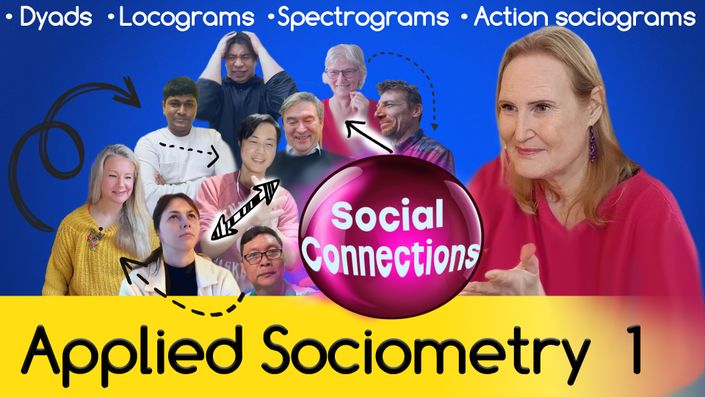
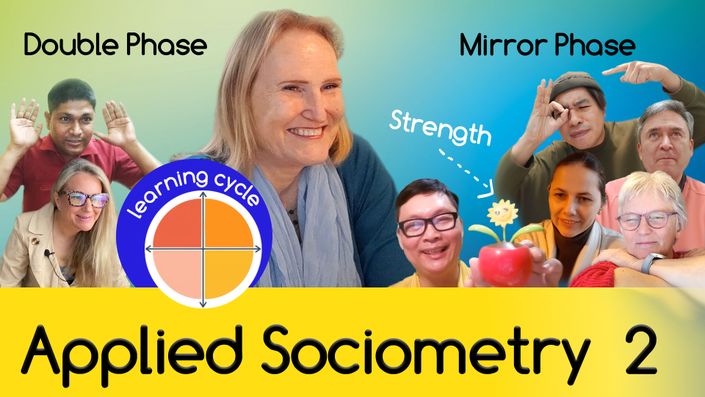
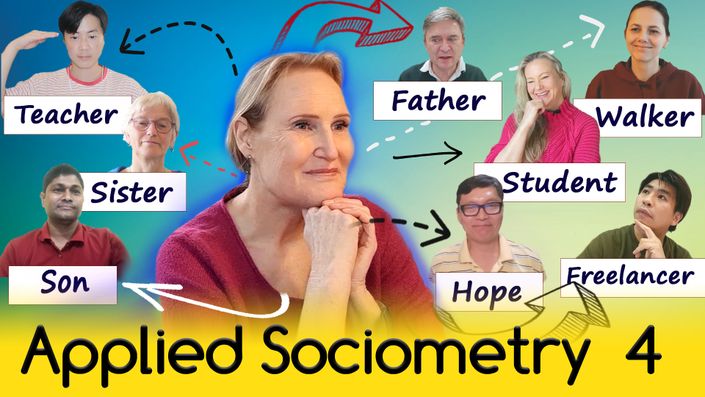
This course unlocks the power of Sociometry by demonstrating essential developmental phases—Double Phase, Mirror Phase, and Role Phase—alongside key interactive techniques such as dyads, spectrograms, locograms, action sociograms, and step-in-circle. Course demonstrates how to effectively integrate these methods into the practice to enhance group cohesion, deepen interpersonal connections, and promote self-awareness and empathy, enabling more impactful interventions and meaningful group growth.
Join an exciting transformative journey with 9 professionals—therapists, counselors, and coaches—from the US, Netherlands, Spain, Nepal, Latvia, Hong Kong, and Malaysia. Guided by instructor Jacomien Ilbrink-de Visser, CP, PAT (TEP in training).
Enhance your skills and enrich your professional toolkit with hands-on, actionable knowledge.
This module is designed for:
• Therapists
• Social workers
• Counselors
• Educators
• Coaches
• Community leaders
• Researchers
• Criminal justice officers
• New to action methods
• Experienced practitioners seeking to expand their skillset
• Students in mental health fields
• Professionals interested in applying sociometry techniques in their work.
Appropriate for those who are new to action methods, as well as experienced practitioners, students in mental health fields, and those who want to develop their skills in action methods.
Learning Objectives:
• Define sociometry and its significance in group dynamics.
• Define the foundational Sociometric instruments.
• Demonstrate how to Enhance Self-Awareness and Empathy among group members.
• Illustrate how to identify the Roles by gaining the ability to recognize and categorize various roles individuals play within a group setting. Describe how these roles impact group dynamics and individual interactions.
• Explore Role Development Processes. Examine the factors influencing role evolution over time, including personal growth, group changes, and situational contexts, and facilitate role development to enhance group cohesion and effectiveness.
• Exemplify the development of insight and empathy through Role Reversal and Doubling, enhancing interpersonal relationships
• Demonstrate how to develop Conflict-Handling Insights: how to identify and reflect on personal strategies for managing conflicts within a group, fostering greater self-awareness and adaptability in challenging situations.
• Exemplify Encounter Techniques: Provide practical tools and methods, grounded in Classical model and Simultaneous Action-Observer Strategy (SA-OS)
• Demonstrate how to Design and adapt sociometric activities to suit various group environments, including therapy, education, and professional settings
• Showcase effective closure techniques that help participants process their experiences.
Course highlights:
• Facilitation Skills: this Course demonstrates how to facilitate a group, using Sociometric instruments
• Core Techniques: Dyads, Locograms, Spectrograms, Action sociograms
• Advanced Sociometric Techniques: Explore how to design and adapt sociometric exercises based on the Doubling, Mirror, and Role Reversal Phases, enhancing group engagement and self-awareness.
• Conflict Resolution Strategies: Learn how to navigate and transform group conflicts using Classical and Simultaneous Action-Observer Strategy (SA-OS) models.
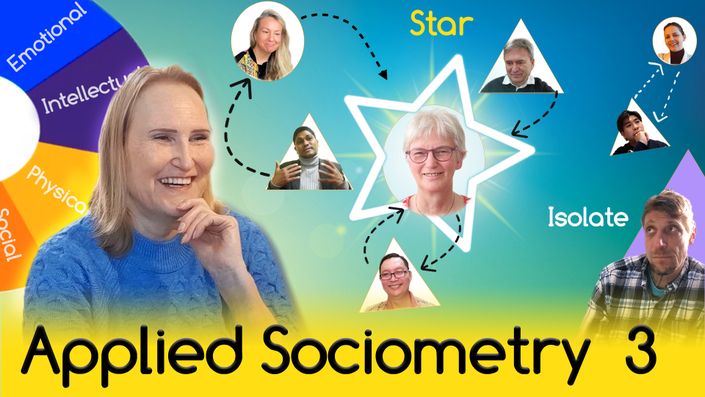
• Practical Group Assessments: Gain tools to analyze group structures, interpersonal connections, and hidden social dynamics to create more cohesive groups
How and where to use:
In Education, for:
• Classroom Dynamics
• Bullying Prevention
• Conflict management
• Building relationship
In Organizational Development, for:
• Team Building
• Change Management
• Conflict resolution
In Therapy and Counseling, for:
• Group Therapy
• Couples and Family Therapy
• Substance Use Counseling
In Community Development, for:
• Community Building
• Conflict Resolution
In Health and Social Services, for:
• Patient Care
• Social Work
In Research, for:
• Social Science Research
• In Criminal Justice, for:
• Rehabilitation Programs
• Gang Dynamics
Presenter:
Jacomien Ilbrink-de Visser from the Netherlands, CP, PAT (TEP in training). Jacomien received her training in psychodrama in New York City, where she mastered the application of explicit sociometry, also known as hand-on-shoulders sociometry. Over the past decade, she has specialized in teaching sociometry to clinicians, coaches, and educators in Europe, developing a structured approach to its safe application using Moreno’s developmental theory as a guideline.
Module Includes:
Main Content:
• Videos - 620 min
• Handouts - 45 min
• Test - 30 x 6 min
• Course Survey - 5 x 6 min
Recommended Content:
• Practicum - 405 min
Hours for Certificate:
• 22 training hours on the Action Explorations Education Certificate. Our courses may be applied toward professional certification/training hours, depending on your board’s policies. Please verify eligibility with your certifying board or primary trainer. We’re happy to connect and answer questions about course content, hours, and documentation. Reach out anytime with your questions.
Course Modules

What Students Are Saying ⭐
Real reviews from students who have taken this course.